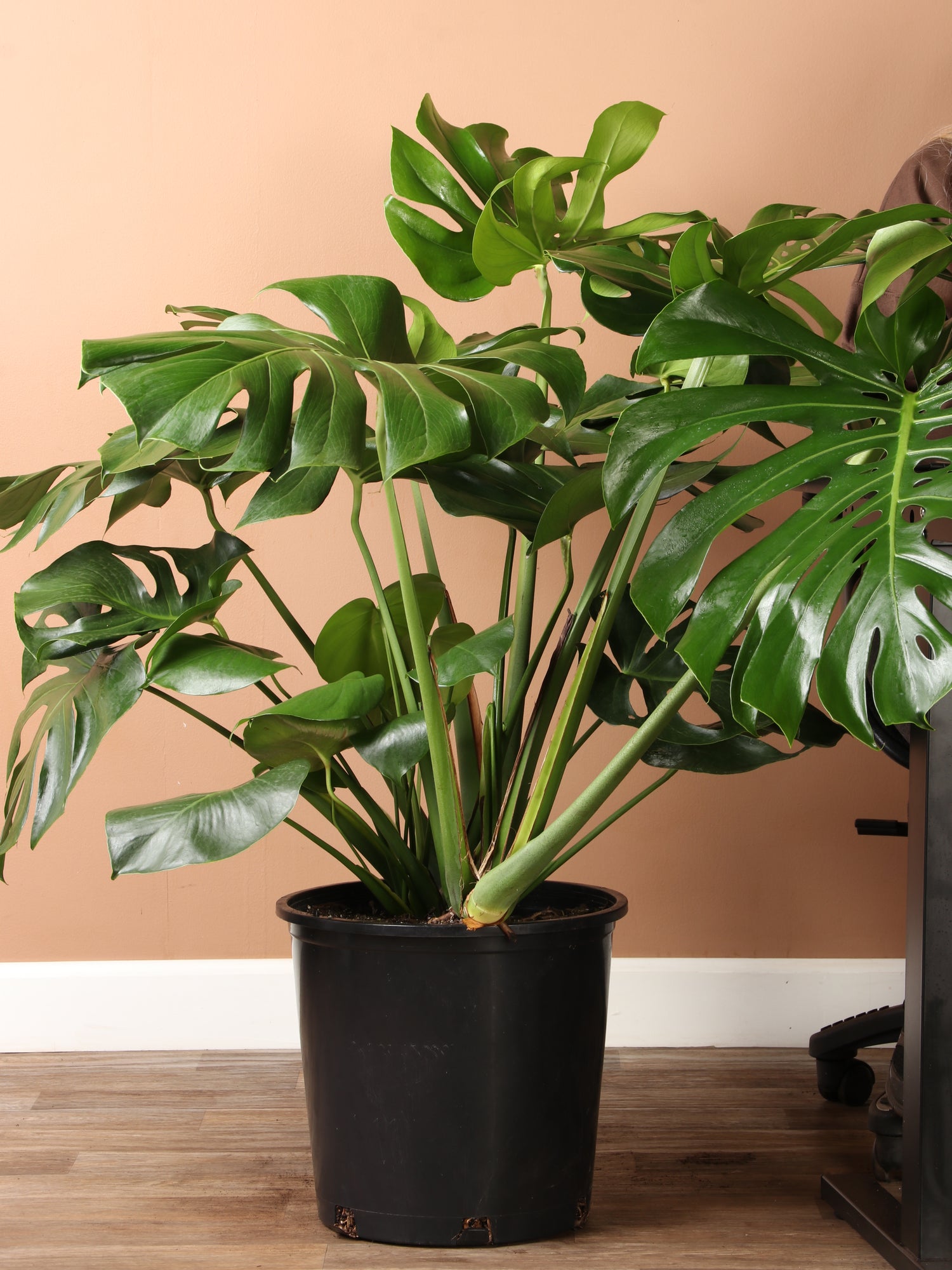
SKU: 70724211692
where are monstera plants native to

where are monstera plants native to 6-8ft Monstera Deliciosa- NYC, NJ, CT, Boston, Providence, Washington DC, Baltimore, Philadelphia, Princeton, Long Island, and Upstate NY Local Plant Delivery – Dahing Plants

Sale price$23.01 Regular price$25.57
Save 10%

Pay in installments of $6.39 with ShopPay, AfterPay and Klarna

Shipping Estimate
USA
  • USA
  • CAN

Ships within 48 hours · Estimated delivery Jul 24 - Jul 29

Promo Codes Available:

For Your Every Summer RSVP, with Code: SUMMER15

Description

where are monstera plants native to 6-8ft Monstera Deliciosa- NYC, NJ, CT, Boston, Providence, Washington DC, Baltimore, Philadelphia, Princeton, Long Island, and Upstate NY Local Plant Delivery – Dahing PlantsDescription The Monstera Deliciosa has been capturing hearts for generations, and we completely understand why. This gentle giant brings such warmth and character to any space with those iconic split leaves that develop naturally as the plant matures. Originally from the rainforests of southern Mexico and Central America, she's perfectly adapted for indoor life and genuinely wants to thrive in your home. What makes her truly special are those

Description

The Monstera Deliciosa has been capturing hearts for generations, and we completely understand why. This gentle giant brings such warmth and character to any space with those iconic split leaves that develop naturally as the plant matures. 

Originally from the rainforests of southern Mexico and Central America, she's perfectly adapted for indoor life and genuinely wants to thrive in your home. What makes her truly special are those beautiful fenestrations (the fancy term for the natural holes in her leaves) that aren't just stunning to look at—they actually help her survive in windy conditions by allowing air to flow through. In nature, she's a climber who uses aerial roots to scale trees while drawing nutrients from the humid air around her. While many Monstera varieties exist, this classic Monstera Deliciosa remains the most beloved for good reason.


Care 

How do you care for an indoor Monstera deliciosa?

Caring for an indoor Monstera Deliciosa means providing bright indirect light near windows, weekly watering when the topsoil feels dry, and maintaining comfortable temperatures between sixty-five to eighty-five degrees Fahrenheit throughout the year for optimal healthy growth.

The beauty of Monstera plant care is that once you understand her basic needs, she's wonderfully forgiving. Place her where she can enjoy filtered sunlight—think of the dappled light filtering through a rainforest canopy. Water when the top 2-3 inches of soil feel dry to your touch, and she'll show her appreciation with new growth. A well-draining potting mix with some perlite keeps her roots comfortable, and during the growing season, a monthly feeding with balanced Monstera fertilizer helps support those magnificent leaves.


Should I mist my Monstera deliciosa?

Misting your Monstera Deliciosa helps increase humidity levels around her gorgeous leaves, which she truly appreciates since she naturally thrives in humid rainforest conditions where moisture levels stay consistently high throughout the growing seasons for healthy development.

It’s not absolutely necessary, but gentle misting makes her feel more at home, especially during dry winter months when indoor heating can reduce air moisture. Think of it as a little spa treatment for your plant friend. You can also place a humidity tray nearby or use a humidifier if you want to create that perfect environment.


How often should I water a Monstera deliciosa inside?

Water your Monstera Deliciosa inside every one to two weeks during growing season, carefully checking that the top two to three inches of soil feel completely dry before giving her another thorough drink to promote healthy growth.

The key to successful watering is paying attention to what your plant is telling you rather than following a strict schedule. In brighter locations, she'll be thirstier and may need weekly watering, while in lower light she can comfortably wait longer between drinks. We always recommend the finger test—stick your finger right into the soil to check moisture levels. This personal approach works much better than calendar-based watering and helps you build that wonderful connection with your plant.


What does a Monstera need to thrive?

A Monstera needs bright indirect light from windows, well-draining nutrient-rich soil mixtures, moderate to high humidity levels, consistent moisture without sogginess, adequate room to grow and climb upward, plus warm stable temperatures year-round for optimal health and development.

Creating the right environment is about understanding her natural habitat and bringing those conditions indoors in a gentle way. She loves having space to spread those magnificent leaves and really appreciates a moss pole or trellis to support her climbing nature.


What do Monstera deliciosa like to be potted in?

Monstera Deliciosa like being potted in well-draining organic-rich soil blends with excellent drainage capabilities, typically combining high-quality potting soil with perlite and orchid bark chunks for optimal aeration and proper drainage throughout the root system for healthy plant development.

The perfect soil mix holds just enough moisture without becoming soggy—imagine the texture of a well-made chocolate cake that's moist but not wet. Adding perlite or bark chips creates those important air pockets that keep her roots breathing comfortably. Always choose a pot with drainage holes because good drainage is one of the most loving things you can provide for your plant.


Where is the best place to put a Monstera plant?

The best place to put a Monstera plant is near large windows that provide bright indirect light throughout the day, such as living rooms, bedrooms, or home offices with east or west-facing window exposure for optimal growing conditions.

Bathrooms and kitchens with natural light are also wonderful spots because of their naturally higher humidity levels, which makes her feel right at home. Avoid placing her directly in harsh afternoon sun from south-facing windows—think gentle morning light or filtered afternoon glow instead. 


Should I put my Monstera in the window?

You should place your Monstera near a window with bright filtered light rather than directly in harsh afternoon sun exposure, which can easily scorch her delicate leaves and cause permanent brown damage throughout the foliage that ruins her natural beauty.


East or west-facing windows are perfect because she can enjoy gentle morning sun without dealing with those intense afternoon rays that are too much for her rainforest sensibilities. If you only have a south-facing window, position her a few feet back or use a sheer curtain to create that perfect filtered light she craves.


Is Monstera deliciosa a good indoor plant?

Monstera deliciosa is an excellent indoor plant choice because it adapts remarkably well to home environments, tolerates various indoor conditions gracefully, purifies air effectively, and creates absolutely stunning visual impact in any space while requiring minimal daily care.

She's genuinely designed for sharing our homes—forgiving when life gets busy, adaptable to different light situations, and grows at a thoughtful pace that won't overwhelm your space. Plus, those beautiful large leaves work hard to clean your air while creating that lush, peaceful atmosphere we all crave. For plant parents who want a meaningful relationship with a plant that gives back as much as it receives, she's truly special.


Pet-friendly?

The Monstera deliciosa is not pet-friendly, as all parts contain calcium oxalate crystals that are harmful to cats, dogs, and other pets if eaten. We always recommend keeping this beautiful plant safely out of reach of curious furry family members who might be tempted to explore with their mouths.


Is Monstera deliciosa toxic to dogs?

Monstera deliciosa is toxic to dogs because calcium oxalate crystals throughout the plant cause oral irritation, excessive drooling, vomiting, and difficulty swallowing if any of the parts are ingested, meaning you’ll need immediate veterinary attention for safety.


Is Monstera deliciosa toxic to cats?

Monstera Deliciosa is toxic to cats. It contains calcium oxalate crystals that can cause immediate mouth irritation, excessive drooling, vomiting, and potentially even more severe symptoms if large amounts of it are consumed by your curious felines.


Factoids

Is Monstera deliciosa toxic to touch?

Monstera deliciosa sap can cause mild skin irritation or rashes in sensitive individuals due to calcium oxalate crystals in plant tissues, but it's generally safe to touch during normal handling and care. Always wash your hands after pruning or repotting.


Is it safe to have a Monstera in your bedroom?

Having a Monstera in your bedroom is completely safe for most people, provided pets and children can’t get access the plant. It also offers excellent air-purifying benefits, giving you better sleep quality while creating a beautiful ambience.

She actually makes a wonderful bedroom companion—those magnificent leaves work quietly through the night to filter toxins from your air while you rest. Just ensure she gets adequate light near a window and that curious pets or little ones can't reach her. Many of our customers find having plants in their sleep space creates a calming, nurturing environment that helps them unwind at the end of each day.


Are Monstera deliciosa air purifiers?

Monstera deliciosa is an effective air purifier that helps filter harmful toxins and improve indoor air quality. They’re popular choices for homes and offices where you need natural air purification solutions that also provide stunning visual appeal.

Those impressive leaves aren't just for show—they're working steadily to clean your air throughout the day and night. She's particularly good at removing formaldehyde and other common indoor pollutants that can accumulate in our homes. While she won't replace a mechanical air purifier, she definitely contributes to a healthier indoor environment while looking absolutely beautiful doing it. It's like having a living air filter that also brings joy to your daily routine.


What is the origin of the name Monstera deliciosa?

The name Monstera deliciosa is made up of the Latin words meaning "monstrous", referring to the dramatic split leaves with striking fenestrations, and "delicious", specifically referencing the plant's edible fruit when it reaches full ripeness in natural habitats.

It's a name that perfectly captures both her dramatic visual impact and her hidden culinary talents.


Is Monstera deliciosa known by any other names?

The Monstera deliciosa is known by many names, including Swiss cheese plant, split-leaf philodendron, fruit salad plant, delicious monster, ceriman, windowleaf, Mexican breadfruit, and Penglai banana, with names varying by different geographic regions and plant communities worldwide.

The "Swiss cheese plant" nickname is probably the most popular because of those distinctive holes that look like nature's own artwork. "Split-leaf philodendron" stuck even though she's not technically a philodendron—sometimes plant names take on a life of their own! 


Why does Monstera deliciosa have holes in its leaves?

Those distinctive holes are brilliant evolutionary adaptations that prevent wind damage by allowing air to flow through the leaves in her native rainforest environment, while also helping rainwater reach the forest floor to support the entire ecosystem around her.


Can you eat Monstera deliciosa fruit?

You can eat Monstera Deliciosa fruit only when it reaches full ripeness, as it tastes like a delightful blend of pineapple and banana, but unripe fruit contains irritating calcium oxalate crystals that cause mouth discomfort and should be avoided completely.


Buy a Monstera deliciosa

Your home is ready for this beloved classic that has been bringing joy to plant families for generations. This Monstera deliciosa offers you the chance to nurture a living piece of art that grows more beautiful with time, developing those iconic split leaves that make every space feel more alive and welcoming.

Through our live video shopping calls, you can meet your exact plant before she arrives—we believe in making sure you feel completely confident about welcoming her into your home. Point to the one that speaks to your heart, and we'll ensure that special plant arrives looking just as healthy and beautiful as when you first fell in love. Because choosing the right plant is the beginning of a wonderful, long-term relationship.

Shipping Notes
  • Free Standard Shipping on $100+ Orders to the USA.
  • Except Preorder products are shipped in 48 hours.
  • Delivery to the USA:
  1. Standard Shipping : 3-10 business days
  • If time is of the essence, please consider selecting expedited delivery for faster service.
Exchange/Return Notes
  • We offer a 30-day return/exchange service after receiving.
  • Final sale items are not eligible for returns or exchanges.
  • To process your return/exchange, please contact us at [email protected]
  • Please click here for more details>>> Return & Exchange Policy
SKU: 70724211692

Discover Niche Categories That Outsell where are monstera plants native to

Top-Converting Item to Boost Your Average Order

4.2 ★★★★★
Based on 26 reviews
Sort
Highest Rating
Newest First
Oldest First
Product Reviews
A
Verified Purchase
Amazon Customer
Fort Morgan, US
★★★★★ 5
Get it before it goes back out of print!
Format: Paperback
This book sat on my wish list for years while the price hovered just a bit too high for my liking. My patience has been rewarded with a back in print price that makes getting it a no-brainer. That said, I can't say I believe the main theory of this book, but it is a good start and an enjoyable read regardless. It seems to me that authors feel a need to propound an overarching and impossible-to-prove theory, in order to write some comparative mythology. I was brought to this book a long time ago after reading Charles Hapgood's Map of ancient Sea Kings. Another good author in the same vein is Gavin White, who wrote Babalonian Star Lore and several others.
WAS THIS REVIEW HELPFUL?YesReportShare
Reviewed in the United States on February 16, 2018
H
Verified Purchase
Howzat
Pawtucket, US
★★★★★ 5
I'm rereading the book. It's great!
The idea of progress is a relatively knew idea within the history of humans. The idea of progress is fundamental to the ideas of Capitalism and economic growth. Many Americans blindly believe that of progress, economic growth, and Capitalism are leading to the betterment of humans. If one carefully reads the IPCC's Fifth Assessment Report, it states that CO2 (and other greenhouse gasses) emissions are driving global warming and thus climate change. That report also says that economic growth and population growth are driving those emissions. Climate change is one of the "progress traps" Wright is talking about. Progress does not inexorably lead to the betterment of humans. Nor do growth economies, including Capitalism. Wright helps readers see the big pictures of how humans have interacted with the Earth in ways that destroy civilizations and threatens to ruin our host, Earth. The Myth of Progress by Tom Wessells is another good book about progress.
WAS THIS REVIEW HELPFUL?YesReportShare
Reviewed in the United States on December 24, 2018
D
Verified Purchase
David S. Rush
Los Angeles, US
★★★★★ 4
Each time history repeats itself, the price goes up
What is the difference between our 21st century global civilization, the ancient Sumerians, the Easter Islanders of Cook's day, empirical Rome, or the Maya civilization. Answer, not much. The last four are all societies that had their heyday, become stuck in a paradigm, and then brought ecological disaster on themselves via overpopulation and over exploitation of natural resources. "Each time history repeats itself, the price goes up", Wrights quotes from some pertinent graffiti. The cost this time could be in the billions of souls. This a short book 132 pages of actual text with another 68 or so of footnotes at the end. It is a mad rush through human history exploring the collapse of those civilizations and a couple that have been more sustainable. Wright also explores the traps of progress. That is mankind becomes so good at hunting he drives his food source into extinction. Then we become so proficient at an irrigation technology we ruin the land. We become so good at weapons we create bombs that could ruin the whole world. As a race, he contends, we seem to push every technology to the brink, to our collective woe. I read with highlighter in hand. I had to restrain myself for marking whole long sections. As it is, the book now has a pink glow. Several pages have yellow tabs so I can find passages easily again. One such passage from the book summarizes it for me: "The human inability to foresee - or to watch out for - long-range consequences may be inherent to our kind, shaped by the millions of years when we lived from hand to mouth by hunting and gathering. It may also be little more than a mix of inertia, greed, and foolishness encouraged by the shape of the social pyramid. The concentration of power at the top of large-scale societies gives the elite a vested interest in the status quo; they continue to prosper in darkening times long after the environment and general populace begin to suffer." I remember as a biology major we studied the boom and bust cycle of animal populations. It was suggested in class that the human animal could follow the same cycle. The professor dismissed the idea, but not so Wright. He sees us at the high point in a few years, then the collapse unless we act now. One other passage really struck home with me: "The idea that the world must be run by the stock market is as mad as any other fundamentalist delusion, Islamic, Christian, or Marxist." That tears at the very sand we have our society built on. The sheer pace of Wright's march through history mirrors the author's urgency about how long we have to act to save our society. The countdown has already begun. The question remains, do we have the gumption to take the necessary action. The book is at its heart liberal, and rightly so. Any possible solution to forestall the potential social collapse will not be from the top of the pyramid. They long ago seemed to have forgotten the concept of usufruct; we are just borrowing this planet from our children and grandchildren. Wright holds out a glimmer of hope, but the candle is flickering.
WAS THIS REVIEW HELPFUL?YesReportShare
Reviewed in the United States on January 21, 2010
R
Verified Purchase
Richard Reese (author of Understanding Sustainability)
Houston, US
★★★★★ 5
A short book loaded with sharp insights
Every year, Canadians eagerly huddle around their radios to listen to the Massey Lectures, broadcast by the CBC. For the 2004 season, Ronald Wright was the honored speaker. He presented a series of five lectures, titled A Short History of Progress. In 2005, Wright's presentation was published as a short book, and it became a bestseller. Martin Scorsese's movie, Surviving Progress, was based on the book. It was an amazing success for a story contrary to our most holy cultural myths. Wright believed that the benefits of progress were highly overrated, because of their huge costs. Indeed, progress was approaching the point of becoming a serious threat to the existence of humankind. "This new century will not grow very old before we enter an age of chaos and collapse that will dwarf all the dark ages in our past." He pointed out that the world was dotted with the ruins of ancient crash sites, civilizations that self-destructed. At each of these wrecks, modern science can, in essence, retrieve the "black box," and discover why the mighty society crashed and burned. There is a clear pattern. Each one crashed because it destroyed what it depended on for its survival. Wright takes us on a quick tour of the collapse of Sumer, Easter Island, the Roman Empire, and the Mayans. He explains why the two oddballs, China and Egypt, are taking longer than average to self-destruct. The fatal defects of agriculture and civilization are old news for the folks who have been paying attention. It has become customary for these folks to believe that "The Fall" took place when humans began to domesticate plants and animals. Wright thinks the truth is more complicated. What makes this book unique and provocative is his notion of progress traps. The benefits of innovation often encourage society to live in a new way, while burning the bridges behind them as they advance. Society can find itself trapped in an unsustainable way of living, and it's no longer possible to just turn around and painlessly return to a simpler mode. Like today, we know that the temporary bubble of cheap energy is about over, and our entire way of life is dependent on cheap energy. We're trapped. Some types of progress do not disrupt the balance of the ecosystem, like using a rock to crack nuts. But our ability to stand upright freed our hands for working with tools and weapons, which launched a million year process of experimentation and innovation that gradually snowballed over time. We tend to assume that during the long era of hunting and gathering our ancestors were as mindful as the few hunting cultures that managed to survive on the fringes into the twentieth century. But in earlier eras, when big game was abundant, wise stewardship was not mandatory. Sloppy tribes could survive -- for a while. Before they got horses, Indians of the American west would drive herds of buffalo off cliffs, killing many at a time. They took what they needed, and left the rest for legions of scavengers. One site in Colorado contained the carcasses of 152 buffalo. A trader in the northern Rockies witnessed about 250 buffalo being killed at one time. Wright mentioned two Upper Paleolithic sites I had not heard of -- 1,000 mammoth skeletons were found at Piedmont in the Czech Republic, and the remains of over 100,000 horses were found at Solutré in France. Over time, progress perfected our hunting systems. Our supply of high-quality food seemed to be infinite. It was our first experience of prosperity and leisure. Folks had time to take their paint sets into caves and do gorgeous portraits of the animals they lived with, venerated, killed, and ate. Naturally, our population grew. More babies grew up to be hunters, and the availability of game eventually decreased. The grand era of cave painting ended, and we began hunting rabbits. We depleted species after species, unconsciously gliding into our first serious progress trap. Some groups scrambled to find alternatives, foraging around beaches, estuaries, wetlands, and bogs. Some learned how to reap the tiny seeds of wild grasses. By and by, the end of the hunting way of life came into view, about 10,000 years ago. "They lived high for a while, then starved." Having destroyed the abundant game, it was impossible to return to simpler living. This was a progress trap, and it led directly into a far more dangerous progress trap, the domestication of plants and animals. Agriculture and civilization were accidents, and they threw open the gateway to 10,000 years of monotony, drudgery, misery, and ecocide. Wright says that civilization is a pyramid scheme; we live today at the expense of those who come after us. For most of human history, the rate of progress was so slow that it was usually invisible. But the last six or seven generations have been blindsided by a typhoon of explosive change. Progress had a habit of giving birth to problems that could only be solved by more progress. Progress was the most diabolically wicked curse that you could ever imagine. Maybe we should turn it into an insulting obscenity: "progress you!" Climate scientists have created models showing weather trends over the last 250,000 years, based on ice cores. Agriculture probably didn't start earlier because climate trends were unstable. Big swings could take place over the course of decades. In the last 10,000 years, the climate has been unusually stable. A return to instability will make civilization impossible. Joseph Tainter studied how civilizations collapse, and he described three highways to disaster: the Runaway Train (out-of-control problems), the Dinosaur (indifference to dangers), and the House of Cards (irreversible disintegration). He predicted that the next collapse would be global in scale. Finally, the solution: "The reform that is needed is... simply the transition from short-term thinking to long-term." Can we do it? We are quite clever, but seldom wise, according to Wright. Ordinary animals, like our ancestors, had no need for long-term thinking, because life was always lived in the here and now. "Free Beer Tomorrow" reads the flashing neon sign on the tavern, but we never exist in tomorrow. The great news is that we now possess a mountain of black boxes. For the first time in the human journey, a growing number of people comprehend our great mistakes, and are capable of envisioning a new path that eventually abandons our embarrassing boo-boos forever. All the old barriers to wisdom and healing have been swept away (in theory). Everywhere you look these days; people are stumbling around staring at tiny screens and furiously typing -- eagerly communicating with world experts, engaging in profound discussions, watching videos rich with illuminating information, and reading the works of green visionaries. It's a magnificent sight to behold -- the best is yet to come! Richard Adrian Reese Author of What Is Sustainable
WAS THIS REVIEW HELPFUL?YesReportShare
Reviewed in the United States on January 20, 2013
R
Verified Purchase
Richard Clark
Boise, US
★★★★★ 5
Wright is right
The fact Wright attacks popular concepts of progress is enough to merit five stars. Until 1955, when I was 25, I naively believed progress was inevitable, natural, and simply a part of human nature and society. I attended the Earl Lectures that year. Swiss Theologian Emil Brunner presented three addresses on "Faith, Hope, and Love" at Berkeley, California. Westminster Press published his series in a book given the same title. I shall quote a few remarks. Brunner traced the burgioning faith in progress to the nineteenth century, when "Darwin's theory of evolution seemed so to support and enlarge this optimistic evaluation of progress as to see it in a cosmic perspective." But the doctrine of progress is not the same as evolution. "Although this idea of progress had a success for which the word 'triumph' is hardly an exaggeration, there were warning voices raised against it, voices of men of weight and importance who were not willng to accept the new doctrine," he said. "It was a new doctrine because it was not known to antiquity, it was not known in the time of the Reformation, it was unknown in all Asiatic culture. It was a new thing! The idea of progress became an axiomatic conviction which needed no proof and could not be disproved." At one point, Brunner said, "Since Hiroshima the world does not believe in progress anymore." The end of WWII was still fresh in our memories, and I suppose that's why he said it. We know, today, that it didn't take long for much of the world to revive and renew its faith in progress. And now it's stronger--and more dangerous--than ever. I'm not opposed to every aspect of progress. Progress, when it moves in wholesome and healthy directions, is a blessing. I'm glad my dentist is able to fill--and save--my teeth without pain. And when it came time for my doctor to pull my cataracts and replace them with implanted lenses, I marveled at the miracle. It was a quick and painless operation, and now I have wonderful vision. It's that dogmatic idea of progress based on greed and cold indifference to global warming that concerns me. It's that ongoing waste of limited resources, whether they be animal, vegetable or mineral, that concerns me. We are pulling the carpet from beneath our feet, and the king is pulling hardest of all. And who is the king? Ignorance! Ignorance is king!
WAS THIS REVIEW HELPFUL?YesReportShare
Reviewed in the United States on September 21, 2008

recommand products